April 13, 2026
Key Takeaways
- The “Zombie” Risk: Standing dead Ash trees become incredibly brittle and can “shatter” during high winds or ice storms.
- Warning Signs: Look for crown dieback, “blonding” of bark from woodpeckers, and D-shaped exit holes.
- Urgency: Because Ash wood rots quickly, these trees become more dangerous and expensive to remove the longer they stand.
The landscape of Washtenaw County has changed significantly since the arrival of the Emerald Ash Borer (EAB). While the height of the infestation may seem like yesterday’s news, we are now entering a more dangerous phase: the era of the “Zombie Tree.” These are standing dead or dying ash trees that appear solid but have become structurally brittle and unpredictable.
In Michigan, where high wind events and heavy ice storms are common, these hollowed-out giants pose a severe threat to homes, vehicles, and power lines. Understanding how to spot them before the next storm hits is vital for every property owner.
What is Ash Shatter?
When most trees die, the wood still holds some moisture, so the branches stay a little flexible.
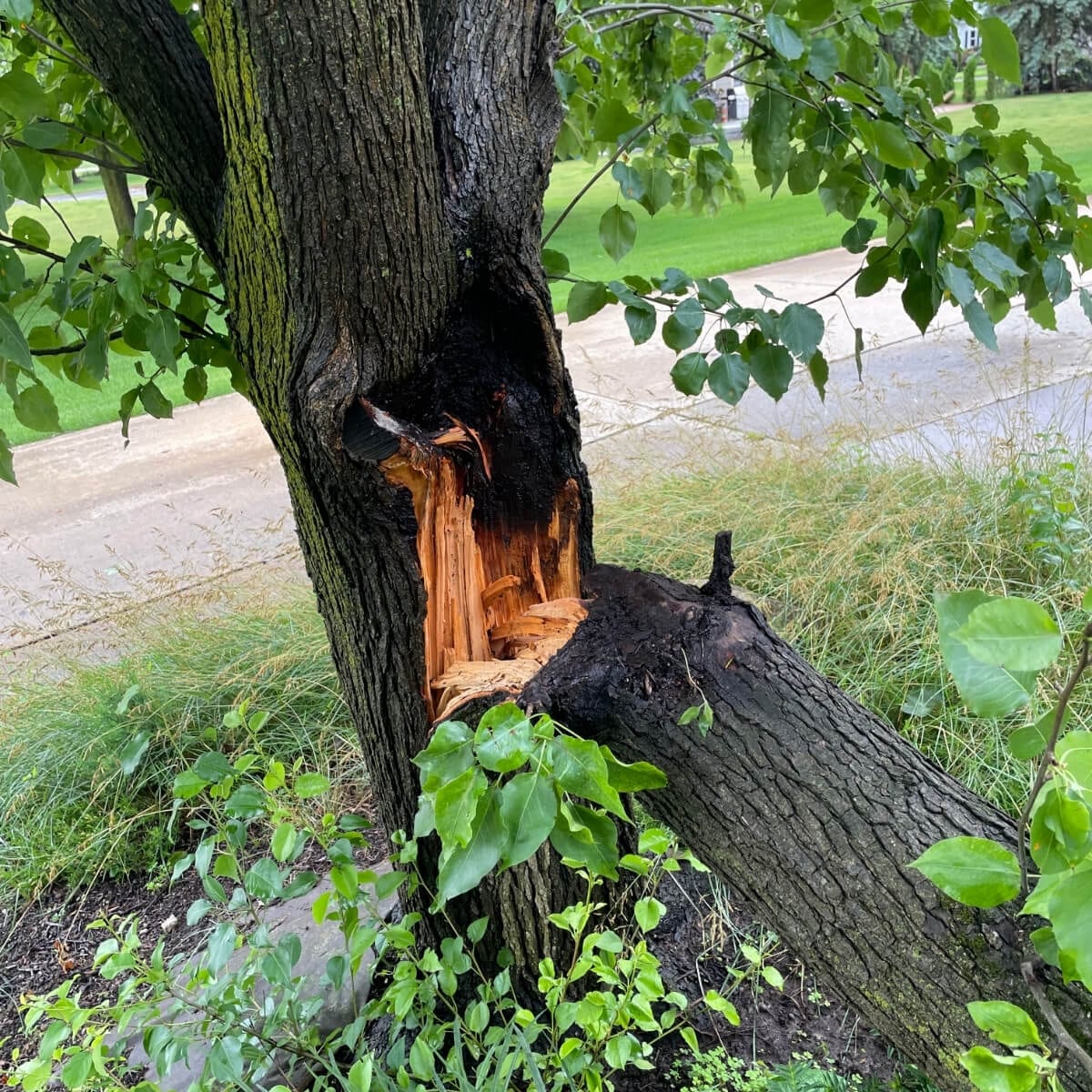
But when an Ash tree is killed by the Emerald Ash Borer, the insect destroys the tree’s internal system that moves water and nutrients. Because of that, the tree dries out completely. The wood becomes extremely brittle, almost like dry glass.
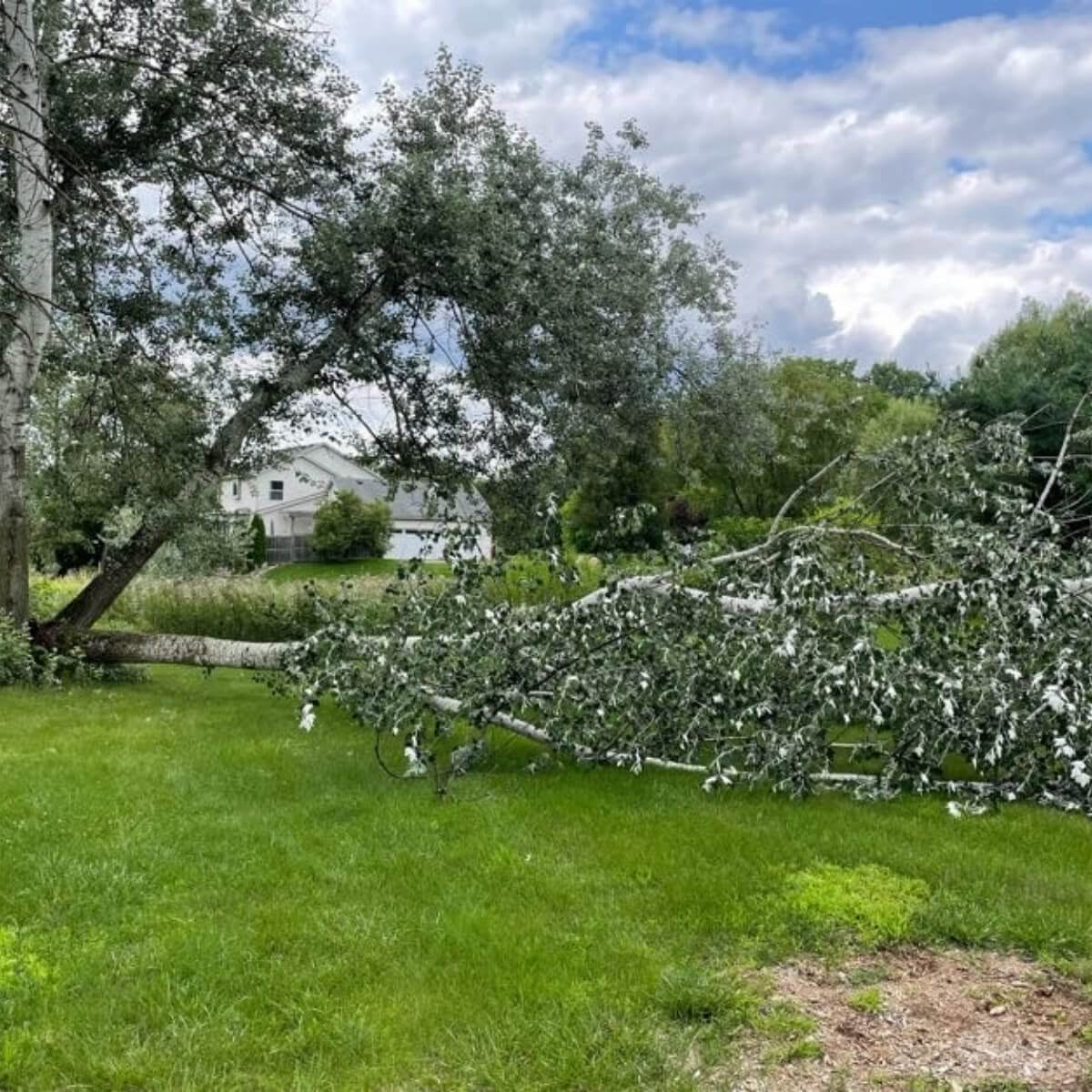
When an Ash tree reaches this stage, it doesn’t just fall like a normal dead tree. It can break apart suddenly.
- Branches can snap in mid-air and break into pieces before hitting the ground.
- The tree may look normal from the outside, but inside it has lost most of its strength.
- Even snow, wind, or its own weight can cause parts of the tree to break unexpectedly.
That’s why dead Ash trees are considered especially dangerous and often need to be removed quickly.
4 Warning Signs Your Ash Tree is Dangerous
You don’t need to be an expert to see the signs. If you have an Ash tree, look for these four “red flags”:
- Bare Branches at the Top (Crown Dieback) The decline almost always starts at the very top. If the top third of your tree is bare or has very few leaves compared to the bottom, the tree is dying and becoming brittle.
- “Blond” Patches on the Bark: Woodpeckers love to eat beetle larvae. To get to them, they strip away the dark outer bark, leaving behind bright, light-colored patches. From the street, the trunk will look like it has “blond” spots.
- D-Shaped Holes: When the adult beetles crawl out of the tree, they leave a very specific mark. Look for tiny holes (about 1/8 inch) that are shaped exactly like a capital “D.”
- “Suckers” at the Base: When a tree is starving for water and nutrients, it tries one last-ditch effort to survive. It will grow small, bushy branches (called “epicormic sprouts”) near the bottom of the trunk or at the base. This is a sign the rest of the tree is failing.
Delaying Removal Will Cost You More Money
Most homeowners think they can save money by waiting for a dead Ash tree to fall on its own. This is almost always a mistake that ends up costing double or triple the price.
- Hazard Pay: When a tree becomes too brittle to climb, tree crews have to charge “hazard pay.” This is because the risk of a limb snapping and hitting a worker is much higher.
- The Crane Requirement: If a tree is too “rotten” or brittle, a climber cannot go up it at all. We have to bring in a massive crane to lift the tree over your house. This adds a lot to your bill compared to a normal removal.
- Emergency Rates: If you wait until a storm knocks the tree onto your roof at 2:00 AM, you will pay emergency “after-hours” rates. It is much cheaper to cut a tree down on a sunny Tuesday than in the middle of a hurricane.
The “Dead Tree” Property Value Drop
A dead Ash tree isn’t just a safety risk; it hurts your home’s value.
- Curb Appeal: A “zombie tree” with no leaves and peeling bark makes a house look neglected.
- Home Inspections: If you try to sell your home, a sharp home inspector will flag a dead Ash tree as a “major hazard.” They will often require you to remove it before the bank will approve the buyer’s loan.
The Bottom Line: Removing the tree while it still has some strength left is the best way to keep your costs down and your property safe.
Why Post-Mortem Decay is an Absolute Emergency
Many homeowners believe that if a tree survived the initial EAB infestation and stood dead for a year, it is safe to leave it for another. This is a dangerous misconception. In Michigan’s climate, dead Ash trees are subject to rapid “sapwood rot.” Because the bark often falls off in large sheets, the exposed wood is vulnerable to fungi and moisture, which accelerates internal decay.
Within two years of total death, the root system often begins to fail. A “Zombie Tree” may look firmly rooted, but the subterranean structure could be completely compromised. This means a tree could fall from the roots up (uprooting) or snap at the base during a routine thunderstorm. Waiting until the tree looks “really bad” often means waiting until it is too late to remove it safely without heavy, expensive machinery.
Identifying a “zombie tree” is only half the battle; removing one safely requires specialized expertise. Highland Tree Services is your local Ann Arbor expert in hazardous tree removal and storm damage prevention. As a family-owned company with over 30 years of combined experience, their team consists of TCIA and ISA members who understand the unique structural failures of EAB-infested wood. Whether you need a proactive safety evaluation or 24/7 emergency tree service after a limb falls, they provide reliable, insured care with a meticulous cleanup. Don’t wait for the next high wind event; call Highland Tree Services at (734) 999-3880 for a free quote to protect your property today.
Frequently Asked Questions
Can an ash tree be saved if it already shows dieback?
If a tree has lost more than 50% of its canopy, it is usually too late. However, trees with less than 30% dieback may be candidates for systemic insecticide injections.
Why is it more expensive to remove a dead ash tree?
Dead ash is unpredictable. Arborists often cannot safely climb these trees, requiring the use of cranes or bucket trucks, which increases the complexity and equipment costs of the job.
Should I keep the wood for my fireplace?
You can use it for firewood, but do not move it across county lines. Moving ash wood is strictly regulated in Michigan to prevent the spread of the borer to new areas.
Does insurance cover the removal of a dead tree?
Generally, homeowners’ insurance only covers tree removal after it has fallen and caused damage to a structure. Proactive removal of a dead tree is typically the owner’s responsibility.
How fast does a “Zombie Tree” become dangerous?
Once an ash tree dies completely, its structural integrity begins to fail within 1 to 2 years. In Michigan’s freeze-thaw cycles, this process can happen even faster.
Do I need a permit to remove a dead tree in Ann Arbor?
Most dead or hazardous trees can be removed, but certain city ordinances or HOA rules may apply. A professional service can help you navigate these requirements.
Can the Emerald Ash Borer spread to my Maples or Oaks?
No. The EAB specifically targets the ash tree species. However, other pests like the Oak Wilt or Spotted Lanternfly are separate threats to monitor.
Conclusion
The “Ash Borer Aftermath” is a quiet crisis. While the trees may look like they are simply “sleeping,” they are often structural time bombs waiting for the next Michigan windstorm. By identifying the signs of crown dieback and “blonding” now, you can take control of your property’s safety.
Partnering with a professional team like Highland Tree Services ensures that these dangerous removals are handled with the right equipment and expertise, leaving your landscape safe and your mind at ease.
Reviewed by a Certified Arborist
This safety analysis has been reviewed by an ISA Certified Arborist to ensure all information regarding soil mechanics and tree failure meets the standards of the International Society of Arboriculture.
Sources & Credible References:
- Michigan Department of Agriculture – Emerald Ash Borer Information
- Michigan State University Extension – Signs and Symptoms of EAB
- USDA Forest Service – Pest Alert: Emerald Ash Borer
- International Society of Arboriculture (ISA) – Recognizing Tree Hazards
- TCIA – Safety Standards for Hazardous Tree Removal
- Ann Arbor City Forestry – Public Tree Information
- Emerald Ash Borer University (EABU) – Research and Webinars
- Washtenaw County Conservation District – Native Tree Replacement Guides