April 13, 2026
Key Takeaways
- Species Vulnerability: Certain trees common to Michigan have wood densities and branch structures that make them “magnets” for ice damage.
- The Weight Factor: A 1/4-inch coating of ice can add hundreds of pounds of weight to a tree’s canopy, leading to catastrophic “shattering.”
- Proactive Pruning: Managing the “wind sail” and weight distribution of these specific trees before winter can prevent home and power line damage.
In Washtenaw County, we don’t just get snow; we get the dreaded “ice event.” When freezing rain blankets Ann Arbor, Chelsea, and Saline, it turns our landscape into a crystal wonderland and a structural minefield. While all trees face stress during a Michigan winter, not all trees are created equal. Some species possess the strength of steel, while others are essentially “zombie trees” waiting for a heavy glaze to bring them down.
Understanding the “Ice Storm Hit List” is essential for every homeowner in Southeast Michigan. If you have these species on your property, you aren’t just looking at trees; you’re looking at potential liabilities.
1. The Silver Maple (Acer saccharinum)
The Silver Maple is perhaps the most common “offender” during a winter storm. They were planted heavily in older Ann Arbor neighborhoods because they grow incredibly fast, providing quick shade. However, rapid growth comes at a price: weak, brittle wood.
Silver Maples are notorious for developing “included bark” and tight, V-shaped crotches. When ice accumulates on their sprawling limbs, these weak joints act as a fulcrum. The wood cannot flex under the weight and eventually snaps or “peels” away from the main trunk. If you have a Silver Maple overhanging your driveway or roof, it is a primary candidate for a pre-winter safety evaluation.
2. The Bradford Pear (Pyrus calleryana)
If arborists had a “least favorite” tree, the Bradford Pear would likely take the top spot. While they offer beautiful white blossoms in the spring, their architecture is a structural disaster. They tend to grow multiple trunks from a single point, creating a weak center.
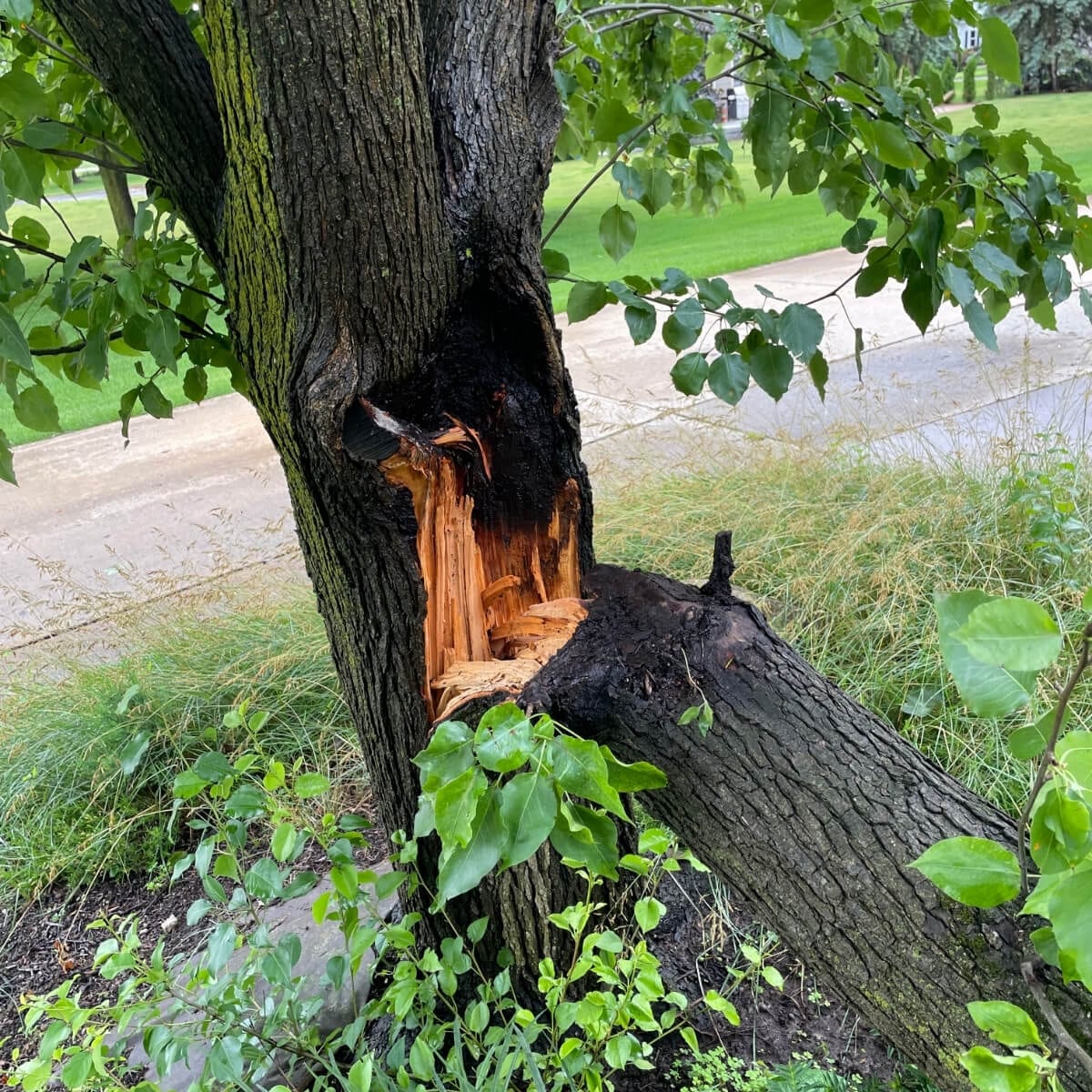
During an ice storm, the weight of the glaze pulls these multiple trunks in opposite directions. It is common to see Bradford Pears literally “explode” or split down the middle after just a half-inch of ice. In many cases, the damage is so severe that the entire tree must be removed. Replacing these with native Michigan species like the Serviceberry or Redbud is often the best long-term safety strategy.
3. The Siberian Elm (Ulmus pumila)
Often mistaken for a “weed tree,” the Siberian Elm is another fast grower with extremely brittle wood. These trees are prone to “ice loading,” where the fine, twiggy growth at the ends of the branches captures an immense amount of ice surface area.
Because Siberian Elms are often “volunteer” trees that grow along fence lines or near power lines, they pose a significant risk to local utility infrastructure. Their branches don’t just bend; they shatter into small, sharp projectiles that can puncture roofing shingles or take out a transformer.
4. Birch Trees (Betula species)
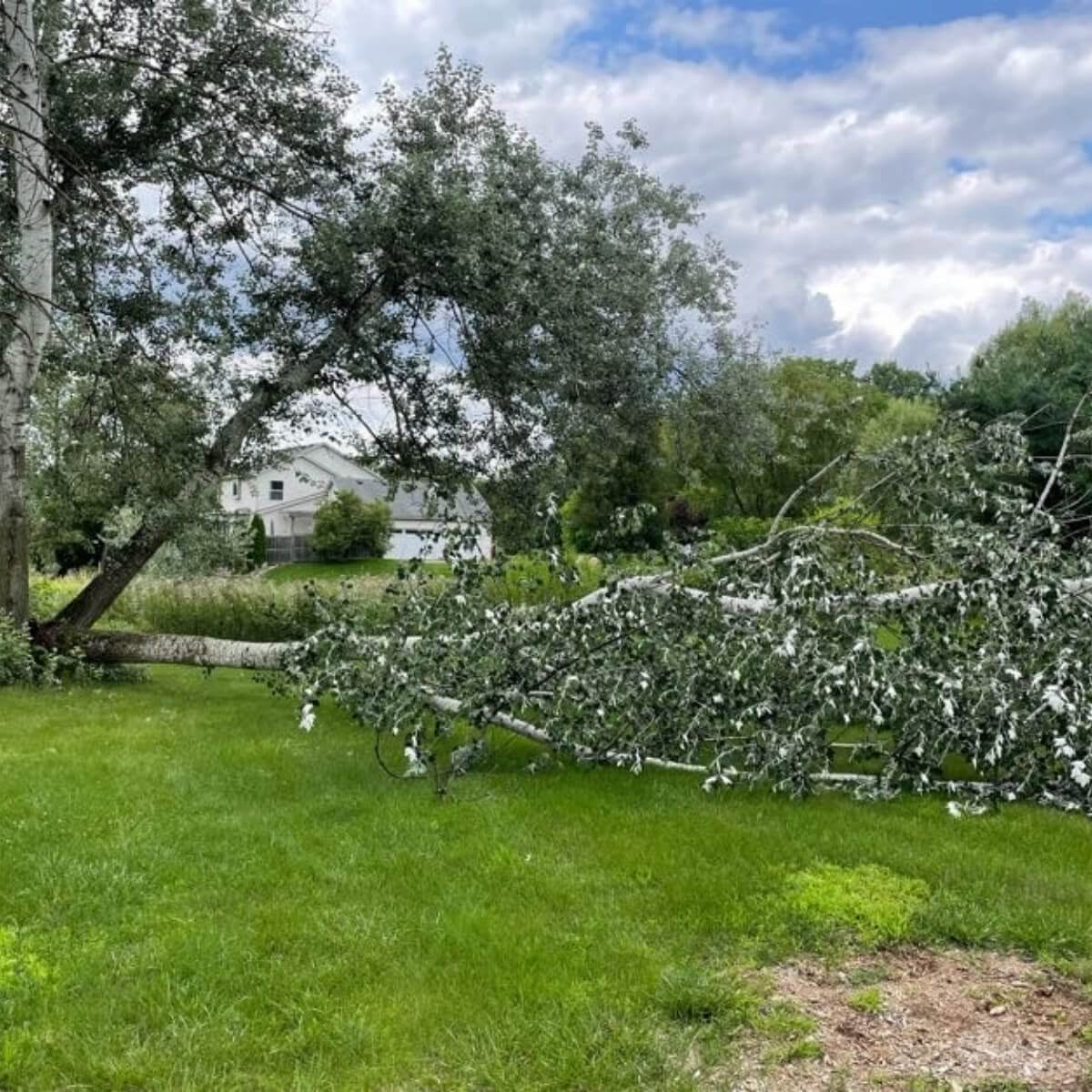
Birch trees, particularly the River Birch and Paper Birch, are staples of Michigan landscaping due to their beautiful peeling bark. However, they are “flexible” to a fault. During an ice storm, Birch trees will bend until their tops touch the ground.
While they don’t always snap immediately, this extreme bending causes internal “stress fractures” in the wood. Once the ice melts, the tree may never fully return to its upright position, leaving it permanently leaning and structurally compromised for the next high-wind event. If a Birch tree is weighted down, never attempt to shake the ice off; the vibration can cause the frozen wood fibers to shatter instantly.
5. The “Zombie” Ash (Fraxinus species)
Following the Emerald Ash Borer (EAB) devastation, Washtenaw County is still littered with standing dead Ash trees. As we discussed in our previous guide, these are the ultimate “Zombie Trees“.
Without the ability to move moisture, the wood in a dead Ash tree becomes as dry and brittle as glass. When an ice storm hits, these trees do not bend at all; they simply collapse from the base or drop massive “widow-maker” limbs. An ice-covered Ash tree is an emergency waiting to happen, especially if it is within striking distance of your home.
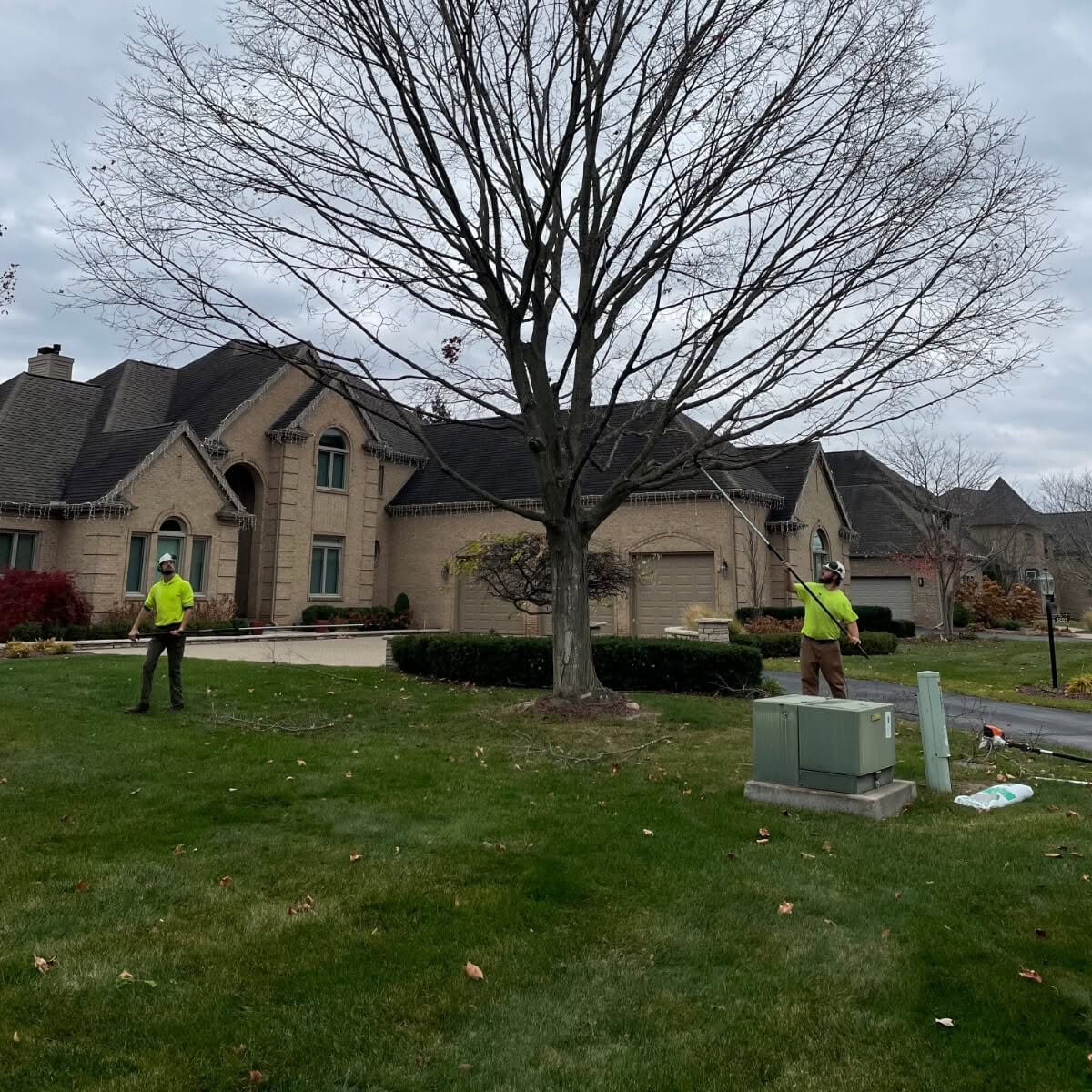
Don’t wait for the ice to start falling to find out which trees on your property are at risk. Highland Tree Services is your local Ann Arbor specialist in storm damage prevention and hazardous tree removal. Serving Washtenaw and Livingston counties with over 30 years of combined experience, their team of ISA and TCIA members can identify structural weaknesses before they lead to a catastrophic failure. Whether you need proactive pruning for your Maples or 24/7 emergency removal after a split, they provide reliable, insured service and a meticulous cleanup.
Frequently Asked Questions
How much ice does it take to break a tree?
Even 1/4 inch of ice can cause significant damage to brittle species. Once you reach 1/2 inch to 1 inch, even healthy, strong trees like Oaks can begin to experience limb failure.
Should I knock the ice off my branches?
No. Frozen wood is extremely brittle. The force of hitting the branch or the vibration of shaking it often causes more damage than the ice itself. Let it melt naturally.
Can a tree recover from a major split?
Usually, no. If a tree splits down the main trunk (like a Bradford Pear), the structural integrity is gone. Even if it survives the season, it becomes a major rot hazard and a threat to future storms.
Is it better to prune trees in the winter?
Yes! Winter is an excellent time for “dormant pruning.” It allows arborists to see the structure of the tree without leaves, making it easier to identify weak crotches and hazardous limbs.
Which trees are most “ice-resistant”?
Generally, slow-growing hardwoods like Oaks, Black Walnuts, and Hickories have denser wood and stronger branch attachments that handle ice loads much better.
Will my insurance cover a tree that fell due to ice?
If the tree hits a covered structure (like your roof), yes. If it just falls in the yard, most policies do not cover the cleanup costs.
What is “Included Bark”?
This is when bark grows into the joint where two branches meet, preventing the wood from bonding strongly. This is the #1 point of failure during ice storms.
Do evergreens handle ice better?
Not necessarily. While they are adapted for snow, the needles of Pines and Spruces provide a massive surface area for ice to coat, which can lead to “top-loading” and trunk snaps.
Conclusion
The “Ice Storm Hit List” isn’t meant to scare you, but to empower you. By identifying if you have Silver Maples, Bradford Pears, or dead Ash trees on your property now, you can take the necessary steps to prune or remove them before the weight of winter takes the choice out of your hands.
Partnering with a professional team like Highland Tree Services ensures that your landscape is a source of beauty, not a source of winter anxiety. Contact Highland Tree Services at (734) 999-3880 for a free quote today. Veteran and senior discounts are available!
Reviewed by a Certified Arborist
This safety analysis has been reviewed by an ISA Certified Arborist to ensure all information regarding soil mechanics and tree failure meets the standards of the International Society of Arboriculture.
Sources & Credible References:
- Michigan State University Extension – Tree Damage and Ice Storms
- International Society of Arboriculture – Avoiding Tree Damage
- USDA Forest Service – Tree Species and Ice Storm Susceptibility
- TCIA – Winter Tree Care Best Practices
- Washtenaw County Conservation District – Native Tree Selection Guide